About this solution
Objectives
1. Simulate coastal and offshore navigation scenarios
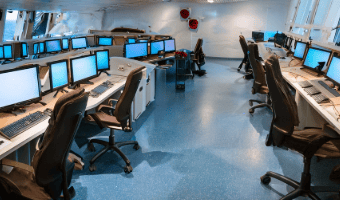
Students use bridge simulators and software (ECDIS, radar, ARPA, AIS) to learn how to steer the vessel, analyse scenarios and follow a route according to safe navigation rules.
2. Carry out manual and digital chart work
Through exercises with set squares, compasses, up-to-date charts and open-source software, students learn to plot courses, correct for the effects of wind and currents, and work in mixed analogue/digital environments.
3. Manage maritime communications and signalling
Activities include simulated exercises with VHF radio, light, sound and visual signals, use of the International Code of Signals and teaching GMDSS stations with DSC, INMARSAT and MF-HF modules.
4. Analyse marine weather conditions and environmental data
Weather stations with sensors and PC interfaces, synoptic charts and access to digital weather portals make it possible to interpret atmospheric phenomena and safely plan simulated sea passages.
Learning Aims
1. Link IMO/STCW regulations to professional practice
The lab makes it possible to apply in practice the content of international regulations on signalling, safety, radiocommunications and the conduct of navigation in line with the global maritime standard.
2. Promote operational responsibility and safety on board
Exercises with PPE, demonstration navigation lights, optical devices and emergency procedures accustom students to working with care and discipline, respecting shipboard rules and the maritime code.
3. Encourage the integration of traditional and digital tools
Teaching is based on a hybrid environment in which traditional chart-work skills are combined with advanced software for navigation, weather and communication, replicating real working conditions.
4. Prepare students for embarkation and professional training
The classroom-lab is a direct bridge to the requirements of embarkation and STCW certification, helping to build the skills needed to enter the world of professional seafaring.