About this solution
Objectives
1. Acquire skills in ship plant and systems
Students learn how auxiliary systems (water, air, oil), propulsion, hydraulic and oil-hydraulic circuits work, using demonstration panels, sectioned engines and digital simulators.
2. Simulate real engine room scenarios
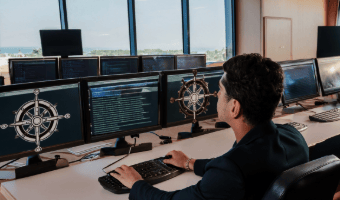
The engine room simulator allows students to practise managing propulsion, reading operating parameters, locating faults and responding to abnormal conditions.
3. Use real workshop tools and equipment
Lab work includes the use of technical tools, drills, torque wrenches, measuring instruments, bench pumps, mechanical components and equipment for vibration and thermal tests and checks.
4. Work safely with PPE and technical regulations
Each workstation is equipped with protective devices, signage, oil collection trays and ventilation and extraction systems. Students are trained in the responsible use of tools in realistic, regulated settings.
Educational Aims
1. Link plant engineering theory to operational practice
The lab allows students to experience directly the theoretical content of thermodynamics, oil hydraulics and marine engineering, with constant cross-references between technical diagrams and real components.
2. Develop autonomy in using plant and simulators
Thanks to workstations with dedicated software and demonstration equipment, students learn to read circuits, monitor pressures and temperatures, and manage systems completely independently.
3. Strengthen skills for the marine and industrial sector
The use of professional devices and software, such as FluidSIM, Transas or Kongsberg, prepares students for real settings in shipbuilding, plant engineering and the maritime sector.
4. Operate in compliance with technical and environmental regulations
The lab integrates all the required safety equipment, making it possible to simulate practical tests in controlled environments, with attention to mechanical, electrical and environmental risks (oils, fumes, heat).