About this solution
Objectives
1. Develop practical skills in shipbuilding work
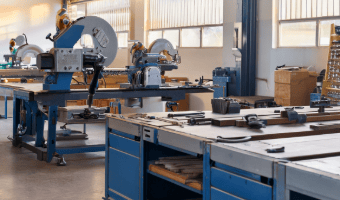
The lab offers workstations with drills, vices, MIG/TIG welders, riveters and hand tools for practical exercises on metals and composites, preparing students for the work typical of light ship carpentry.
2. Design and draw ship components in a CAD environment
With software such as AutoCAD, Rhinoceros, FreeShip and SolidWorks, students become familiar with modelling hulls, sections and compartments, producing technical drawings and three-dimensional ship designs.
3. Simulate hydrodynamic phenomena on physical models
Thanks to the optional test tank and the use of dynamometers, the models built can be tested for thrust and resistance, supporting empirical analysis of the behaviour of vessels at scale.
4. Promote safety and awareness of regulations
All workstations are equipped with personal protective equipment (PPE) and fume extraction. The lab includes RINA/IMO technical documentation, material data sheets and regulatory tables, encouraging the adoption of safe, up-to-date professional practices.
Educational Aims
1. Link theory, drawing and real fabrication
The lab allows students to move from design to the workbench, with an integrated teaching flow between CAD software, model making and workshop tools that builds practical ability and technical precision.
2. Train specialists in ship carpentry and shipbuilding
The skills acquired range from reading the design to the practical fabrication of joints, structural elements and models, in line with the professional profiles required in the shipbuilding industry.
3. Foster autonomy and a sense of technical responsibility
Each student has an individual workstation with tools and technical sheets for safe exercises, encouraging the development of operational autonomy and respect for workshop procedures.
4. Teach design quality and material traceability
Through the use of technical drawings, construction standards, material data sheets and model making, students become aware of the quality of the final product and of the associated technical documentation.