About this solution
Objectives
1. Experiment with how renewable energy systems work
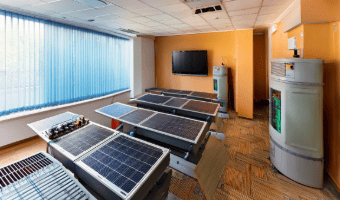
Students work at modular stations with photovoltaic panels, mini wind turbines, hydroelectric kits and modules for residential and industrial installations. The activities allow them to observe, configure and test the production and management of energy.
2. Acquire skills in measurement, monitoring and control
Using wattmeters, network analysers, digital multimeters, data loggers and simulation software, students learn to collect data and monitor the main electrical and environmental parameters of energy systems.
3. Integrate thermal and electromechanical technologies
The lab includes scale-model heat pumps, Stirling cogeneration systems and biomass boilers, simulating energy efficiency and thermoelectric conversion scenarios for modern installations.
4. Apply safety regulations in electrical installations
Exercises include disconnectors, circuit breakers, insulating gloves and electrical safety mats to ensure training that complies with electrical safety and risk prevention standards.
Educational Aims
1. Link theory and practice in the energy sector
The teaching activities make it possible to tackle key concepts of renewable energy, power balances and system sizing through practical experience in the lab.
2. Promote sustainability and energy efficiency
The lab provides tools for analysing sustainable scenarios and integrated systems, raising students’ awareness of the efficient use of energy and the environmental impact of installation technologies.
3. Prepare students to enter the photovoltaic, wind and home automation sectors
The technical content covered is aligned with the skills required in the electrical and energy systems sector, supporting qualified entry into professional and post-diploma settings.
4. Encourage collaborative work and data processing
Thanks to shared workstations, group activities and IT tools, students learn to document tests, analyse the data collected and collaborate in solving complex problems.
Other solutions for: