Informazioni sulla Soluzione
Objectives
1. Carry out physico-chemical analyses on musts and wines
Students use analytical balances, UV-Vis spectrophotometers, pH meters, refractometers and hydrometers to measure acidity, sugars, alcohol and other key parameters in winemaking.
2. Manage winemaking and micro-vinification processes
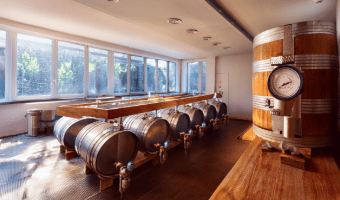
The lab makes it possible to experiment with the production stages using vats, tanks, crushers, small presses and scaled-down fermenters, simulating the entire cycle of turning grapes into wine.
3. Apply oenochemical lab techniques
Activities include the use of scientific glassware, reagents, burettes, beakers, stirrers and precision instruments for the qualitative and quantitative analysis of substances in wine samples.
4. Develop wine sensory analysis skills
The set-up includes stations with ISO tasting glasses, spittoons, neutral lighting and tools for visual, olfactory and taste evaluation in a professional setting.
Learning Aims
1. Understand the winemaking production process
The pathway guides students through every stage of winemaking, from crushing and fermentation to bottling and storage, with an experiential approach.
2. Interpret the results of lab analyses
Students learn to read pH values, alcohol content, residual sugars and acidity, using software or oenological tables to compare and validate the data obtained.
3. Work in compliant environments with safety devices
Each workstation is equipped with PPE, eyewash stations, emergency showers and cabinets for reagents and chemicals, ensuring compliance with hygiene, safety and HACCP regulations.
4. Link activities to sustainable winemaking practices
The technical and scientific approach includes notions of consumption, reuse of materials, wastewater management and correct waste disposal, promoting environmental education in the wine sector.