About this solution
Objectives
The programme develops practical, multidisciplinary skills in chemistry, biology, microbiology and biotechnology, integrating digital tools for acquiring, analysing and documenting experimental data.
- Developing practical laboratory skills
- Using incubators, distillers, pipettors, centrifuges and stirrers.
- Bacterial cultures, sample isolation and processing, sterilisation protocols.
- Strengthening scientific foundations: chemistry, biology, microbiology and biotechnology.
- Experimental approach: methods of analysis, detection and precision control.
- Digital transition: tools and software for data acquisition, analysis and storage.
Aims
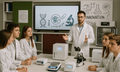
The lab offers a realistic, inclusive environment for biological, microbiological and biotechnological activities, with equipment for precision measurement, microscopy and genetic analysis.
- Biological and microbiological activities
- Bacterial cultures, sample isolation and processing.
- Cell biology and microbiology experiments.
- Experimental methods, sterilisation techniques and standard procedures.
- Microscopy and visual analysis
- Observing tissues, cells and microorganisms with optical/binocular/LED microscopes.
- Real-time documentation with microscopy tablets and USB cameras.
- Visual learning through direct and digital interaction.
- Precision measurement
- Analytical and precision balances, adjustable micropipettes, PCR plates.
- Accurate dosing and precise chemical-biological preparations.
- Reproducibility of experiments and comparison of data.
- Genetic analysis and biotechnology
- DNA extraction, PCR thermal cyclers, gel electrophoresis with UV systems.
- Experiences aligned with research and diagnostic practice.
- Documentation and traceability
- Image acquisition software, plate scanners, cameras with USB storage.
- Digital management and storage of experimental data.
Conclusion
By the end of the programme, students will be able to:
- Safely use laboratory instruments (incubators, centrifuges, micropipettes, microscopes).
- Prepare cultures, isolate and process samples and apply sterilisation procedures.
- Observe and document under the microscope using digital acquisition and storage systems.
- Carry out accurate measurements and dosing and ensure the reproducibility of experiments.
- Perform basic genetic analyses (DNA extraction, PCR, electrophoresis) and ensure data traceability.
The solution is suitable for courses such as Health Biotechnology, Chemistry and Materials, Applied Sciences and Health and Social Care Services; it promotes inclusion and equal opportunities through innovative teaching methods and active, collaborative learning.
Other solutions for:
Related solutions