About this solution
Objectives
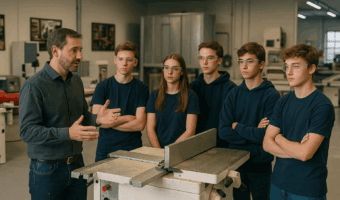
The pathway develops practical woodworking skills, with a focus on machine tools, safety, interpreting technical data sheets and managing the process.
- Knowledge of machine tools
- Tilting circular saw, spindle moulder, planer/thicknesser, sander, multiple drilling machine, etc.
- Technical specifications, fields of use and operating limits.
- Practical skills
- Correct and safe use of every machine in the lab.
- Setting parameters, tooling up and choosing tools.
- Interpreting technical data sheets
- Reading specifications and functional data to make informed machining choices.
- Routine maintenance and machine logs.
- Workplace safety
- Protective devices, emergency systems and operating procedures.
- Good practice to prevent risks and accidents.
- Managing the production process
- From rough timber to finishing: preparation, intermediate operations and quality control.
- An integrated view of the wood production cycle.
Aims
The lab prepares students and operators to enter the carpentry and furniture sector with an integrated theory-practice approach and a strong focus on technical culture.
- Technical and vocational training: practical activities on real machines in work scenarios.
- Operational autonomy: manual dexterity, precision and responsibility in handling equipment.
- Method and awareness: technical data sheets supporting exercises for lasting learning.
- Promoting industrial craftsmanship: technical skills across the wood supply chain.
Conclusion
The pathway enables students to acquire specific machining skills and cross-disciplinary abilities: technical reading, operational management, safety and teamwork. Students are better prepared for professional carpentry settings, contributing to the efficiency and quality of the production process. The solution includes systems for inclusion and equal opportunities, encouraging innovative teaching methods and active, collaborative learning.
Other solutions for: