About this solution
Objectives
1. Design professional graphic work in a digital environment
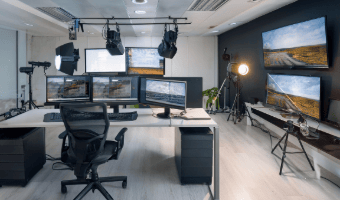
Students learn to use raster and vector graphics software (Adobe Photoshop, Illustrator, InDesign) to produce editorial, advertising and creative projects on workstations with dedicated graphics cards, graphics tablets and high-definition monitors.
2. Use photographic equipment to produce images
The lab includes DSLR and mirrorless cameras, interchangeable lenses, TTL flashes and accessories for studio and outdoor photography. Students learn shooting techniques, composition, exposure control and the use of photographic backdrops.
3. Manage the printing and visual production stages
Teaching includes the use of A3 photo and laser printers, high-resolution scanners, plotters, laminators, heat presses and tools for finishing, binding and presenting graphic materials on a range of paper and rigid media.
4. Work on real projects in simulated environments
Activities are structured to simulate professional graphic workflows: from the creative phase to physical production and presentation. Exercises involve technical materials, mock-ups, speciality paper, precision cutters and display supports.
Learning Aims
1. Acquire technical skills in graphics, printing and photography
The lab provides practical preparation for working in visual communication, advertising graphics, professional printing and commercial or fine-art photography.
2. Develop transferable creativity and problem-solving skills
Students tackle individual and group exercises that require visual design, materials management and meeting schedules and deadlines, simulating an agency or graphic studio setting.
3. Work safely and to quality standards
All workstations and equipment are fitted with safety systems, PPE, anti-static mats and signage. The materials used are suitable for school environments and compliant with regulations for educational use.
4. Prepare for employment and self-production
By producing personal portfolios, mock-ups, printed projects and simulated exhibitions, students build a practical toolkit that will help them enter the world of work, design and publishing.
Other solutions for: