About this solution
Objectives
1. Develop practical leatherworking skills
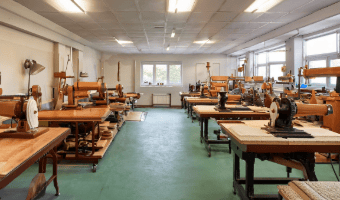
Students work with cutting machines, industrial sewing machines, skiving machines, presses and hand tools to make leather goods, developing precision, dexterity and process knowledge.
2. Apply shaping and finishing techniques
Using moulds, compasses, needles, hammers and bench tools, students learn to shape, dye, polish and finish leather products for leather goods, footwear or accessories.
3. Integrate IT tools and CAD software for pattern-making
PCs, dedicated CAD software, cutting plotters and pattern scanners help students acquire digital skills applied to the design and prototyping of leather items.
4. Work safely in specialised lab environments
All workstations are equipped with PPE (goggles, gloves, masks, aprons), extraction systems and signage, so that work takes place in environments compliant with health and safety regulations.
Learning Aims
1. Train professionals skilled in craft and industrial leather goods
The lab makes it possible to reproduce the complete production cycle of a leather item: cutting, stitching, assembly, colouring, shaping and finishing.
2. Assess the quality and technical characteristics of materials
Thanks to physical and chemical test kits and precision balances, students learn to recognise defects, properties and performance of hides and semi-finished products.
3. Create custom projects with a creative and technical approach
By combining manual practice with CAD design, students develop original items according to aesthetic, functional and production criteria.
4. Gain autonomy and a collaborative attitude in lab activities
Activities are structured to promote teamwork, the management of processing stages and the documentation of the process through technical sheets and digital reports.
Other solutions for: