About this solution
Objectives
1. Design and build AC and DC electrical circuits
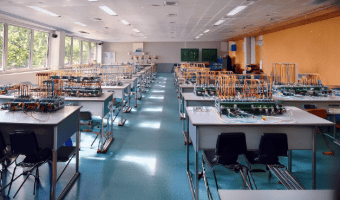
Students learn the principles of electrical engineering by building resistive, RLC, three-phase and single-phase circuits on training panels. The workstations allow electrical components to be mounted and connected modularly according to functional diagrams and technical standards.
2. Use professional electrical measuring instruments
Each student works with TRMS multimeters, wattmeters, oscilloscopes, and panel-mounted ammeters and voltmeters. Practical work includes measuring voltage, current, power, impedance and power factor in different load configurations.
3. Simulate circuits and analyse waveforms with dedicated software
PC workstations include simulation software such as PSIM, Multisim and EWB, enabling virtual circuit analysis and comparison with real results in support of the experimental method.
4. Safely wire panels and circuits with real devices
Guided exercises include assembling panels with switches, relays, timers, motors and inverters. Students learn the correct use of tools, PPE and procedures for live working, in accordance with CEI standards and electrical safety regulations.
Learning Aims
1. Acquire operational skills in building installations
The lab develops the ability to install and test low-voltage electrical circuits, understanding the function and interconnection of modular electrical devices in distribution boards.
2. Interpret wiring diagrams and technical standards
Students learn to read and draw up industrial wiring diagrams, applying CEI/IEC standards for technical drawing, symbols and safe installation.
3. Recognise and analyse fundamental electrical quantities
Through the integrated use of bench instruments, the course makes it possible to observe and compare the behaviour of real and simulated circuits, encouraging analytical and experimental learning.
4. Work in compliance with safety conditions
All activities are designed to introduce the correct use of PPE, safe working practices, and the use of insulating mats and personal protective equipment for work on live systems.
Other solutions for: