About this solution
Learning Objectives
- Planning and configuring KNX systems
- Commissioning and troubleshooting
- Extending existing systems
- Documentation and maintenance
- Integration into a management level, e.g. BACnet
- Networking existing KNX systems via KNX/IP
- Optional use of a line/area coupler
- Optional use of a DALI gateway
Lab Objectives
The main objective of the lab is practical, in-depth learning of KNX technology through direct interaction with a realistic simulator of a multi-storey building. The activities are designed to:
- Become familiar with the infrastructure and operation of a KNX bus system.
- Experiment with programming and testing real devices (actuators, sensors, gateways, dimmers, meters) within an installation divided into functional areas (offices, corridors, outdoor areas and basements).
- Understand the interaction between automatic control, management logic, comfort, security and energy saving in smart buildings.
- Promote the use of professional software tools such as ETS5 for the design, parameterisation and diagnostics of KNX installations.
Educational Aims
1. Specific technical skills. Students will acquire practical skills in:
- KNX topology and components, including power supplies, couplers, logic modules, actuators, dimmers, IP interfaces, binary inputs and scene modules.
- Configuring real scenarios such as: o lighting control with dimming and timed regulation o roller shutter automation o climate control based on occupancy, temperature and window status o simulation of weather conditions and control of the external façade
- Using ETS5 software to generate projects, download physical addresses, configure parameters and run real-time diagnostics.
- Commissioning and checking communication between devices via KNX telegrams. 2. Transferable and methodological skills
- Interpreting electrical and logic diagrams.
- Analysing energy flows using KNX meters and measuring instruments.
- Solving practical problems and assessing faults using the experimental method.
- Working in a team, documenting the work done and communicating in a technical, structured way.
Conclusion
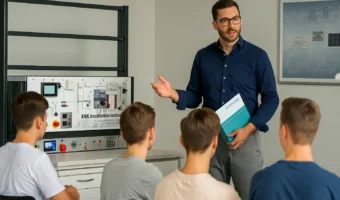
The “KNX installation technology – Working with a real system” lab gives students a complete, career-oriented experience in home and building automation. Through a realistic, scalable and multidisciplinary system, the practical trainer passes on concrete skills, enabling students to design, program, configure and manage KNX installations in both residential and professional settings. Using ETS5 software in combination with real devices, measuring instruments, advanced communication interfaces and installation components prepares students to enter the world of building automation with confidence, tackling the challenges of digitalising the built environment. This solution includes technology systems that support inclusion and equal opportunities through the use of innovative teaching methods. It is designed to promote active and collaborative learning.
Other solutions for: