About this solution
Objectives
1. Know the Regulations and Principles of Electrical Safety
The aim is to provide a solid theoretical grounding in the CEI, EN and IEC standards governing the safety of electrical installations. Students learn to identify electrical risks and the related protective measures, developing awareness of the installer’s duties regarding prevention and safety.
2. Use Measuring Instruments Accurately
The module aims to build skills in the practical use of professional electrical measuring instruments: multimeters, insulation testers, RCD testers, loop impedance testers and continuity testers. The activity includes guided demonstrations and simulated exercises to ensure correct procedures and readings.
3. Carry Out Inspections and Tests on Real and Simulated Installations
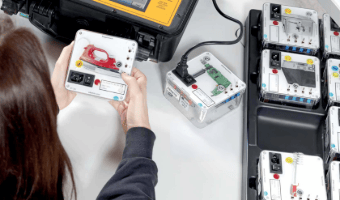
Students learn to carry out functional and safety tests on electrical panels, protective devices and circuits. The system uses training workstations that reproduce real situations, in which students apply the verification procedures required by regulations for commissioning and maintenance.
4. Simulate Faults and Assess Intervention Strategies
The aim is to develop analysis, diagnosis and intervention skills through the simulation of electrical faults. Students tackle realistic scenarios in which they must identify anomalies, assess risks and propose solutions, acquiring a working method that is also useful in professional settings.
Aims
1. Train Competent, Certifiable Technicians
The main aim is to prepare technicians qualified in the inspection and maintenance of electrical installations, able to work in compliance with regulations. The programme includes activities that can be combined with recognised professional certifications.
2. Promote a Culture of Workplace Safety
The module helps develop an aware, preventive approach to electrical risk, stressing the importance of following the rules, using PPE and applying emergency procedures. The aim is to build a safety-oriented mindset in every working context.
3. Link Practice to the Real Working Context
The teaching system offers realistic simulated experiences that allow students to gain confidence in carrying out inspections and technical work. This makes the transition from school to the world of work smoother.
4. Support Technicians’ Continuing Professional Development
The system is also designed for refresher and retraining courses, allowing practising technicians to keep up with new regulations, instruments and measurement protocols while maintaining high standards of safety and competence.
Other solutions for: