About this solution
Objectives
1. Install small-scale wind systems
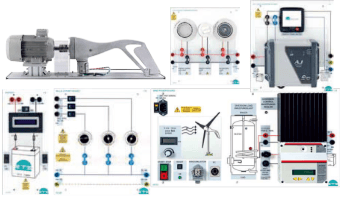
Students learn to assemble and configure a wind turbine with wind simulation, analysing the connections and its integration with the system.
2. Understand the physical principles of wind
The package covers the study of wind power, the power coefficient, cut-in speed, available kinetic energy and the effect of wind variations.
3. Analyse off-grid systems for self-sufficiency
Participants configure stand-alone energy systems that supply direct or alternating current from wind sources, including in combination with photovoltaic systems.
4. Simulate real operating conditions
Using a USB-controlled wind simulator, students check how wind power output changes as parameters such as wind speed and torque are varied.
Learning Aims
1. Develop skills in energy integration
The wind system can be integrated with boards for low-voltage storage and consumption, providing an ideal context for studying hybrid energy systems.
2. Monitor and control energy flows
The charge controller with LCD display and the PC software make it possible to observe values in real time, making theoretical concepts tangible.
3. Learn about the conversion and use of wind energy
The off-grid inverter makes it possible to power 230V AC devices, demonstrating the real-world uses of stored wind energy.
4. Consolidate the use of professional instruments
Exercises include the use of digital meters, 12V lamps and inverters, with safe measuring instruments and standardised lab connections.
Other solutions for: