About this solution
Objectives
1. Understand on-grid and off-grid PV architectures
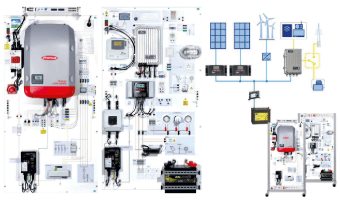
Students learn the structural and functional differences between grid-connected and stand-alone PV systems, including hybrid systems, gaining a complete overview of decentralised energy solutions.
2. Simulate and control system performance
Using inverters, data loggers and PV simulators, students can carry out realistic tests of monitoring, commissioning, shading and dynamic parameter adjustment.
3. Assess and apply protective measures
The module includes exercises on the correct use of disconnectors, surge protection and RCDs, with configuration and verification tests using TRMS instruments and network analysers.
4. Integrate PV systems into smart grids
The lab prepares students to integrate PV systems into smart grids, simulating bus interfacing, remote control and energy flow tracking.
Learning Aims
1. Develop skills in modern PV technologies
The pathway provides an up-to-date overview of inverters, data loggers, charge controllers and storage systems, with an emphasis on system configuration and sizing.
2. Acquire operational and testing skills
The practical exercises aim to prepare students for the professional testing of PV systems, focusing on data acquisition, fault analysis and instrument-based checks.
3. Explore how hybrid systems work
The module includes tests on stand-alone and DC and AC hybrid systems, with different generation, storage and load management technologies, including UPS mode.
4. Prepare for integration in real settings
Thanks to simulators, real PV modules and standard interfaces, the lab provides preparation that can be put to immediate use in professional PV installation and maintenance.
Other solutions for: